Stock value -- --%
DECODING
min / Published on 03/31/25

Using data to optimise energy efficiency in plants

In response to soaring energy costs and its profound awareness of the environmental impact of its activities, as well as the planet’s urgent need for action, Michelin is strengthening its commitment to greater sobriety: its target is carbon neutrality by 2050, with an intermediate goal of a 50% reduction by 2030.   

  • Industry 4.0, particularly with energy-related data, probably offers the greatest opportunity in terms of reducing our factories’ environmental impact.

    Nicolas Auger Environment Footprint Product Manager
The Group aims to reduce its annual CO2 emissions by approximately 120,000 metric tons and to decrease significantly its energy spending.
One of the keys to taking on this ambitious challenge is digitalizing energy consumption management at Michelin's industrial sites worldwide. The Group is currently preparing to roll out “Product Energy,” a digital solution designed to do just that. Product Energy features analytical reports for experts in Power BI and a mobile app for operators. Michelin believes that energy should become a KPI like quality or productivity. 
 

From Factory Data Lake to Corporate Data Lake: the result of a partnership between Michelin and Microsoft

The first step in ensuring the success of this digital project is recovering local energy consumption data and then transferring it to the Corporate Data Lake. By facilitating the cross-referencing of data, the Corporate Data Lake encourages the development of new, more powerful algorithms and an increase in computing power.
To achieve this, Michelin selected Microsoft Azure as the cloud platform for its global data storage needs in early 2024. This partnership, combined with close collaboration with the teams and an agile approach, enabled a quick transition and facilitated the development of “Product Energy,” which is now valued by all its users. The Group is counting on a powerful network of energy experts and coordinators at the zone and entity levels, Energy & Water Site Leaders, and data experts (data scientists, data engineers, data analysts, etc.) to manage energy consumption in its factories as effectively as possible.

Did you know?

A corporate data lake is a data repository that can store massive amounts of heterogeneous raw data in native formats. 

Product Energy: from usage to data

What are the most energy-intensive activities? When it comes to tire production, compound mixing and curing account for over 40% of factories’ energy consumption, so Michelin has focused on these two activities and developed targeted versions of Product Energy. Valladolid in Spain, Olsztyn in Poland, and Shenyang in China pioneered the launch of this large-scale digital project.

From usage to data: what product(s) and how many are produced on each machine? Is the machine idle or running? How much energy does it use? ... One of the first challenges was collecting and standardizing all that data so it could then be compared and analyzed efficiently. Over 5 billion pieces of data have already been collected. To ensure that the data is robust and coherent, Michelin draws on its data expertise and its ability to design cutting-edge algorithms.

  • 5

    Over 5 billion pieces of data have already been collected

20

The digital solution "Product Energy" is already implemented in more than 20 factories

33,000

Over 33,000 tonnes of raw materials saved thanks to digitalization

120,000

Over 120,000 tonnes of CO2 saved thanks to the digitalization of our plants

Product Energy: A simple solution that is available to everyone and already in place in more than 20 factories
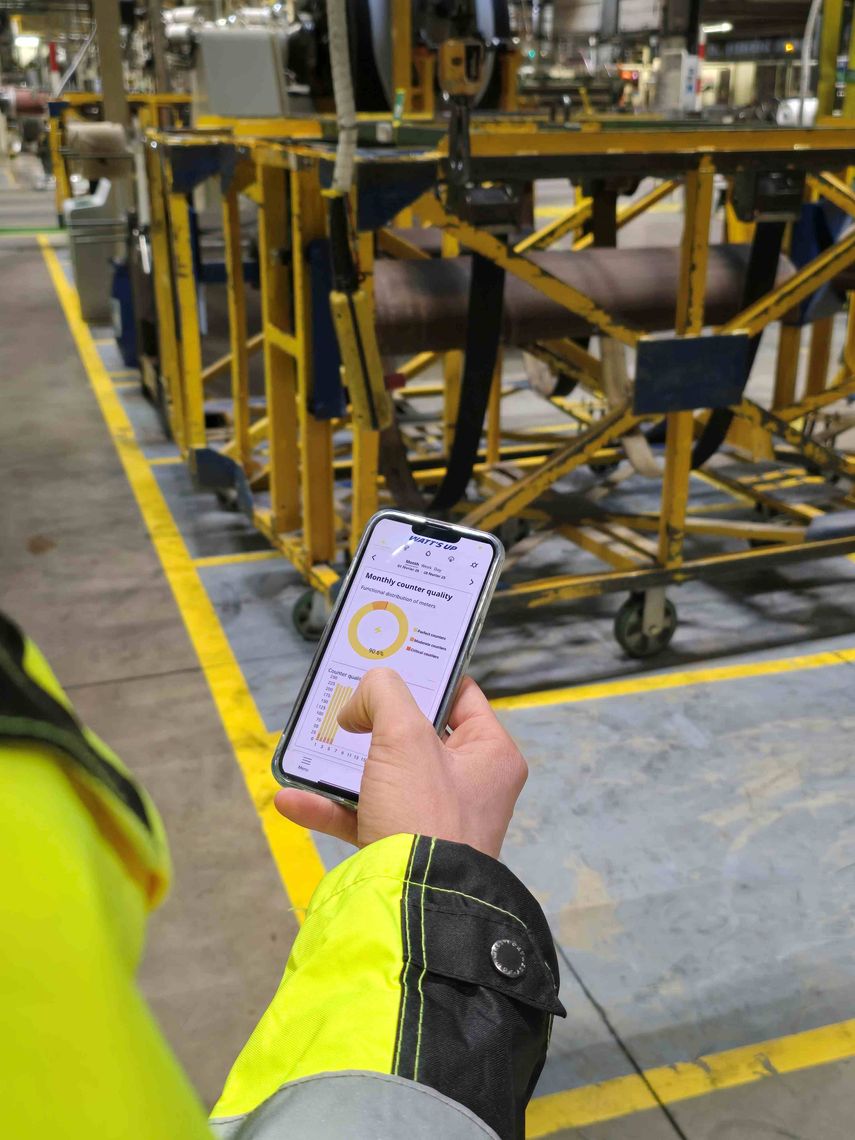
Product Energy” has 3 main features: real-time energy consumption monitoring, excess consumption alerts, and recommendations.
This simple application is available to everyone and was designed for operators, their managers, and energy experts. Operators can use the real-time monitoring feature in their mobile app to adjust their processes. Data from all the Group’s factories can be collected in just 2 to 3 hours. Managers and energy experts on each site can access a range of comparative analyses on the factory, activity, workshop, or business unit levels, depending on their needs. They can then work together to identify potential avenues for improvement and take corrective actions based on reliable data verified and validated by AI algorithms. More than 10,000 meters have already been installed in more than 20 factories, with a goal of equipping all Group factories in 2026.
An operator in a Michelin manufacturing workshop consults the Product Energy app from his smartphone.

From best practice to standard...

Product Energy has already proven its worth, particularly in mix production workshops. The data collected has revealed energy consumption variations of up to 16% on equivalent machines. Reducing cylinder speeds by 10% can generate 10% energy savings without impacting production speed or quality. As a result, work on standardizing the configuration of the entire machine fleet is currently underway.

A digital solution that fits into Michelin's “All Sustainable” approach
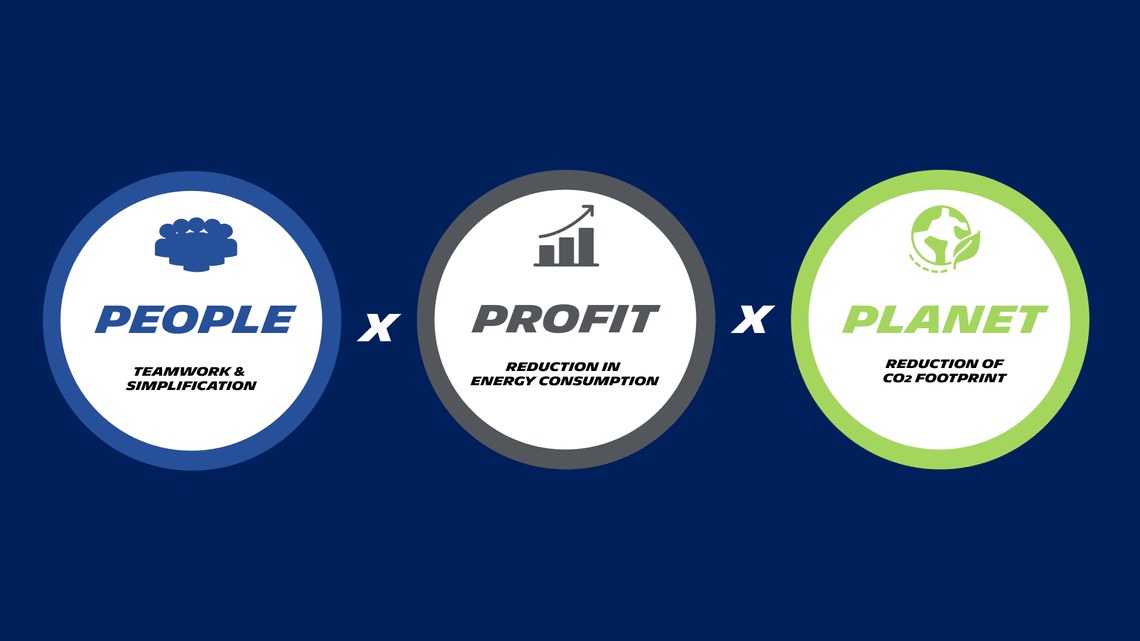
Infographic illustrating the balance sought by Michelin around 3 pillars: people, planet and profit

For Michelin, digital transformation is a way to accelerate innovation to advance its strategy and its All Sustainable ambitions. For example, why not optimize production schedules to use as little energy as possible at specific times, or, in the longer term, identify which factory and what time of day or night would be best to produce a specific tire? It is clear that using the data that is now stored in the Cloud offers a vast array of opportunities to optimize manufacturing by facilitating decision making based on reliable data.