For Michelin, using sustainable - recycled or renewable bio-based - materials in its tires still does not make them all sustainable; tires need to have as little impact as possible on the environment throughout their entire lifecycle. All sustainable tires must be designed for longlasting performance from the first mile until the tread wear limit so as to use less materials and energy and avoid having to replace tires too early. All sustainable tires must offer the same - if not better - safety performance than today’s tires. Lastly, all sustainable tires must be suitable for mass production, not just available in small quantities or in particular models.
Towards an all sustainable tire
Lifecycle analysis: an essential step
For Michelin, designing an all sustainable tire means reducing its environmental and social impact based in particular on the lifecycle analysis from tire design through to its manufacture, transportation, use and recycling.
From life cycle assessment to an all sustainable tire?
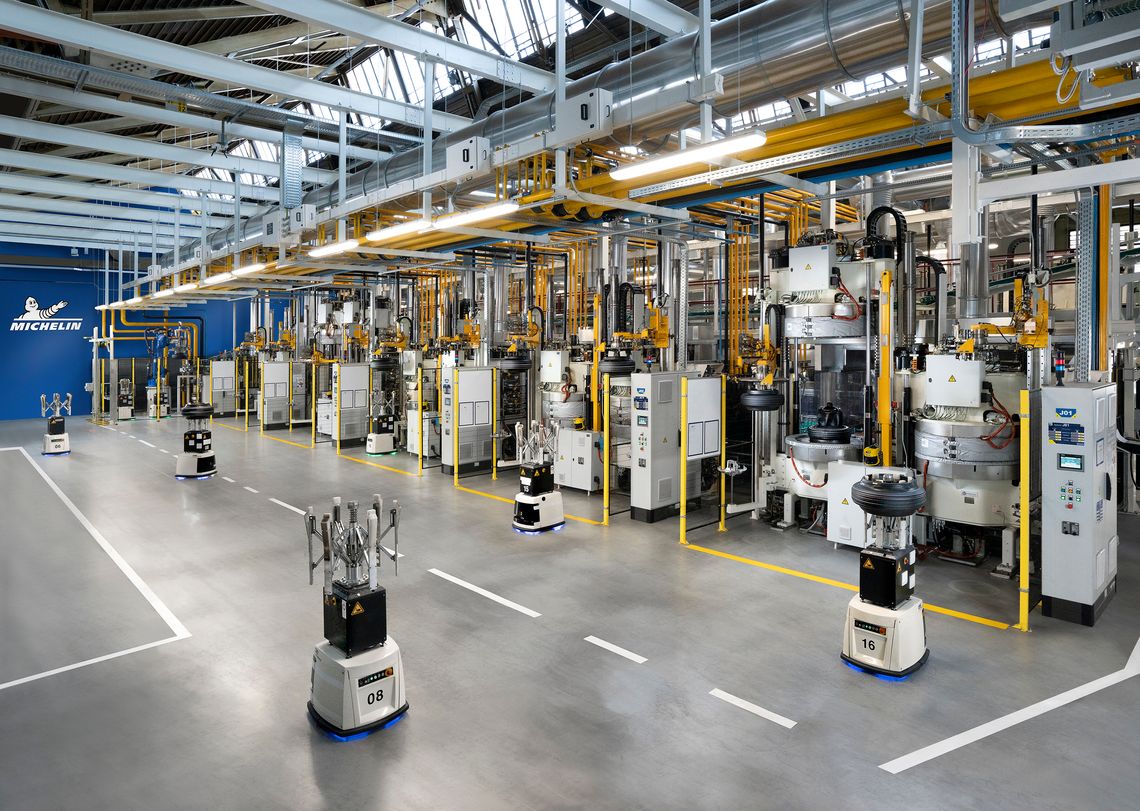
Integrating renewable or recycled materials without compromising on performance
Michelin can leverage its extensive know-how in high-tech materials (3,678 material-related patents filed at the end of 2021). The Group is also investing in startups and concluding multiple partnerships with innovative companies: Pyrowave (r-styrene), Carbios (r-PET), Enviro (rCB etc.) in order accelerate disruptive technology. Michelin pays close attention to its sourcing and has been evaluating supplier CSR performance for more than ten years now. At the end of 2022, 87% of its main suppliers were in compliance with the standards laid down by the Group.
Renewable or recycled materials, according to Michelin
Recycled materials: styrene regenerated from waste polystyrene (yoghurt pots, food trays, packaging, etc.), textiles regenerated from PET* waste (plastic bottles, dispensers, etc.), carbon black recycled from end-of-life tires.
Renewable materials: natural rubber from a responsible industry, butadiene (or bio-butadiene), products made from biomass (plant waste).
*PET : Polyéthylène Téréphtalate
Fact Checking Division: renewable or recycled materials
Scaled-up production
Michelin factors in the environmental impact of its tires at each stage of their lifecycle but also ensures that industrialization can be scaled-up so that everyone can benefit.
The idea is not to make a splash with a show tire.
At the end of 2022, Michelin presented car and bus tires homologated for road use containing 45% and 58% renewable and recycled materials respectively. The technology used will be transposed onto the tires arriving on the market in 2025.
For the 2023 season, Michelin supplied tires for the world MotoE™ championship containing 52% of renewable and recycled materials and capable of reaching track speeds of 250 km/h. Another example is the Mission H24 hydrogen prototype and the Porsche GT4 ePerformance fitted with tires containing 63% renewable and recycled materials.
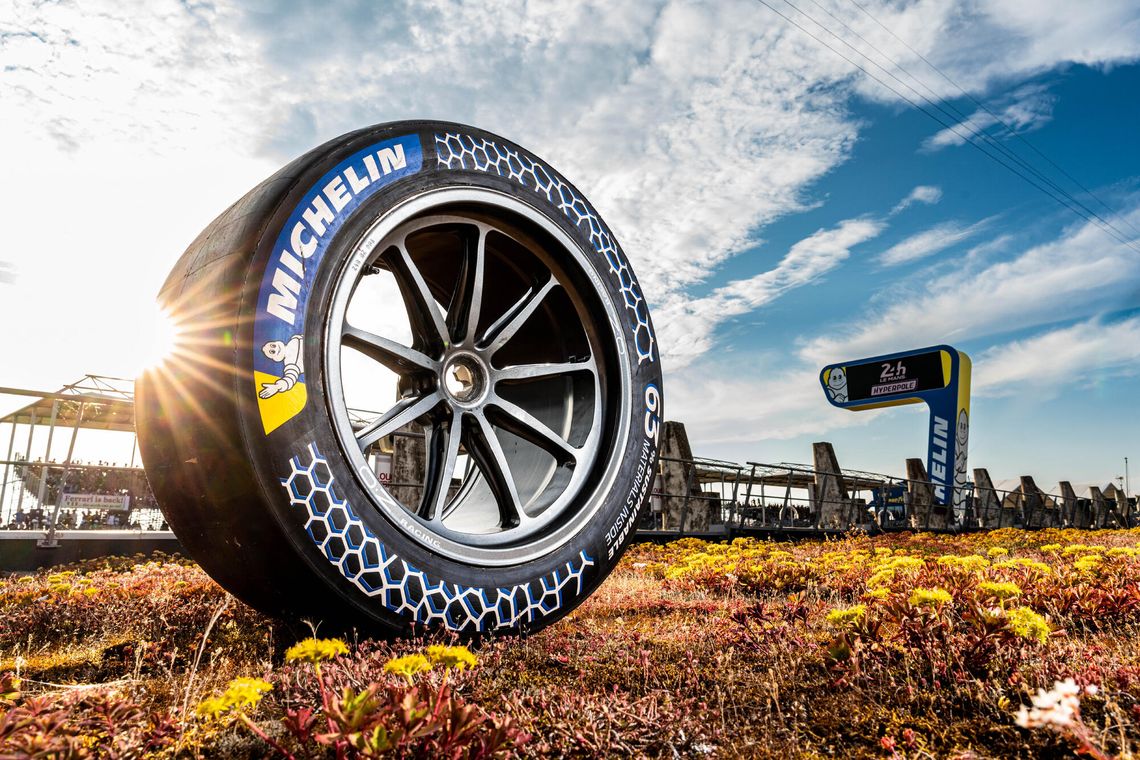
Dream or reality? For Michelin, creating a fully sustainable tire may seem pretty ambitious but it is definitely within our capabilities. Over and beyond its alternative holistic approach based on lifecycle analysis, the Group can count on many other advantages: unique expertise in materials, an R&D powerhouse with as many as 6,000 engineers, researchers, chemists and developers across several continents as well as high-level experience in Motorsports, a proving ground for sustainable innovations. Michelin can also rely on carefully chosen partnerships and programs allowing it to speed up the implementation of disruptive technologies.